Philip II of Spain: A monarch between pomp and asceticism
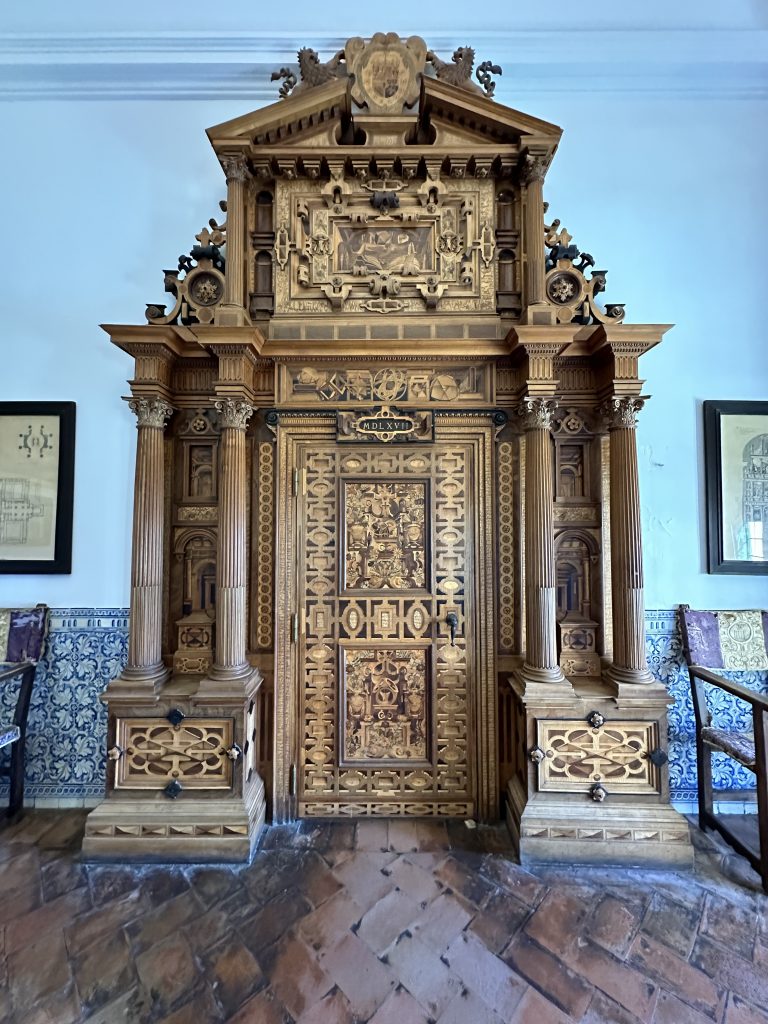
My visit to El Escorial prompted me to take a look at the life of its builder: Philip II. It reveals a fascinating contrast between royal splendour and ascetic simplicity. As one of the most influential figures of the 16th century, he was known for his religious devotion, political leadership and cultural patronage. But behind the majestic façade of the monarch lies a story of human facets, family relationships and the construction of one of Spain’s most important monuments, El Escorial.

King Philip II (Spanish: Felipe II) of the House of Habsburg was a complex personality who united various aspects in his reign. As a devout Catholic, he was determined to defend the Catholic faith and strengthen the power of his realm. He was a thoughtful and disciplined ruler who was deeply involved in the affairs of his realm and was often described as strict and reserved.
El Escorial: a monumental combination of power, faith and splendour
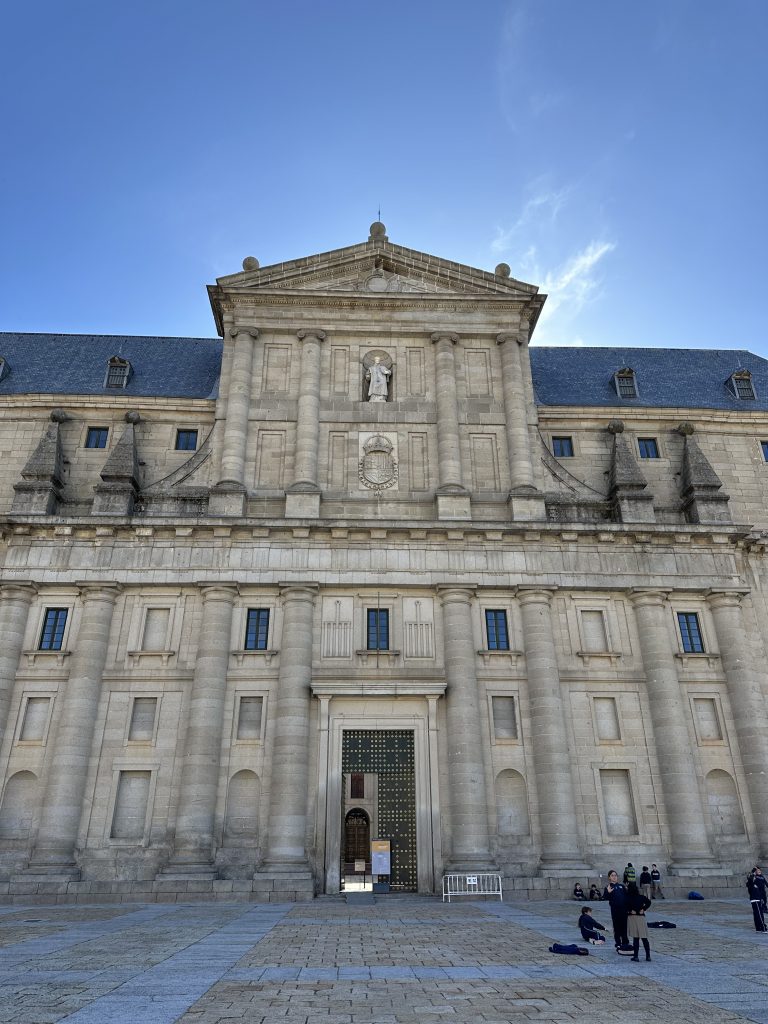
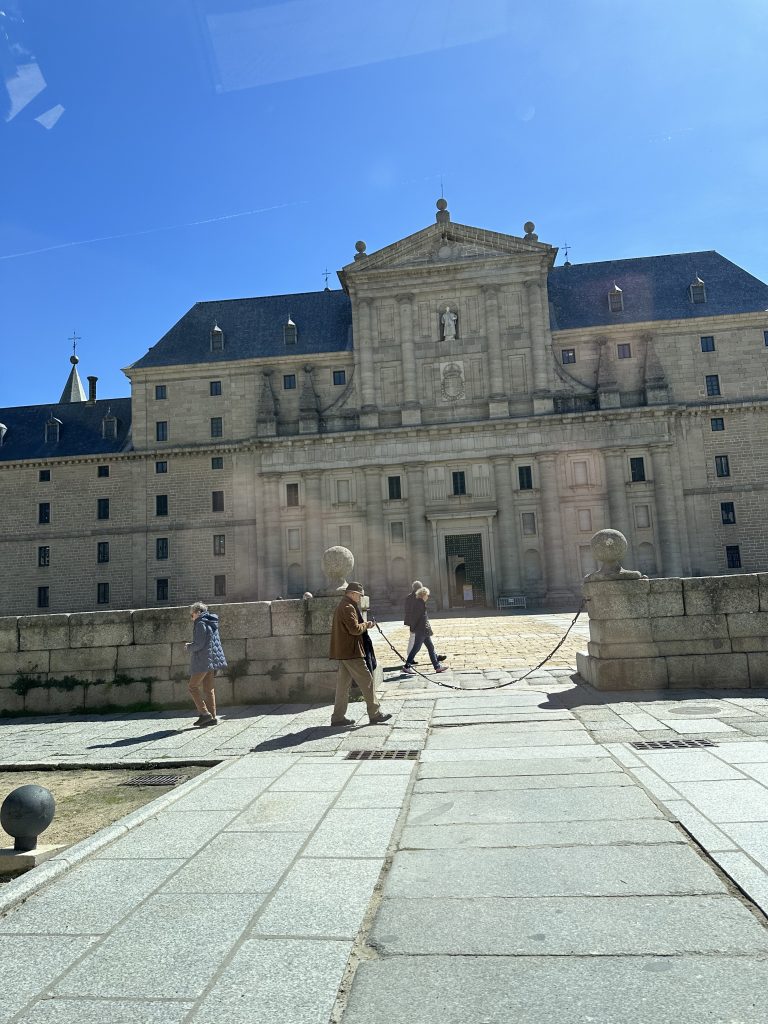
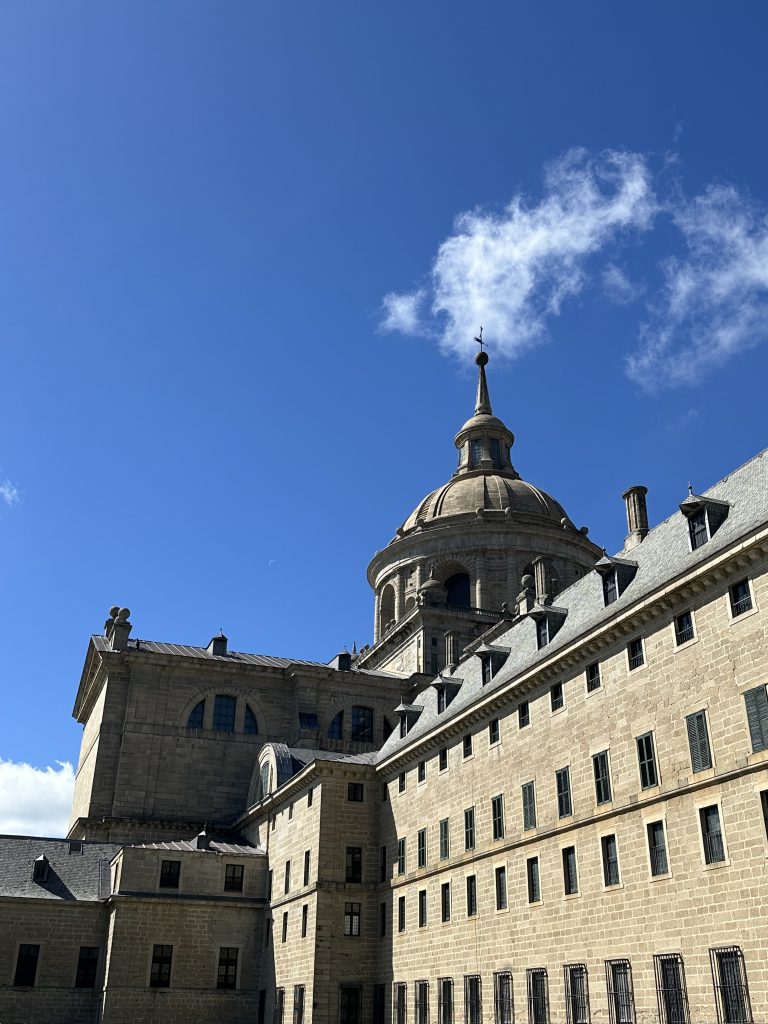
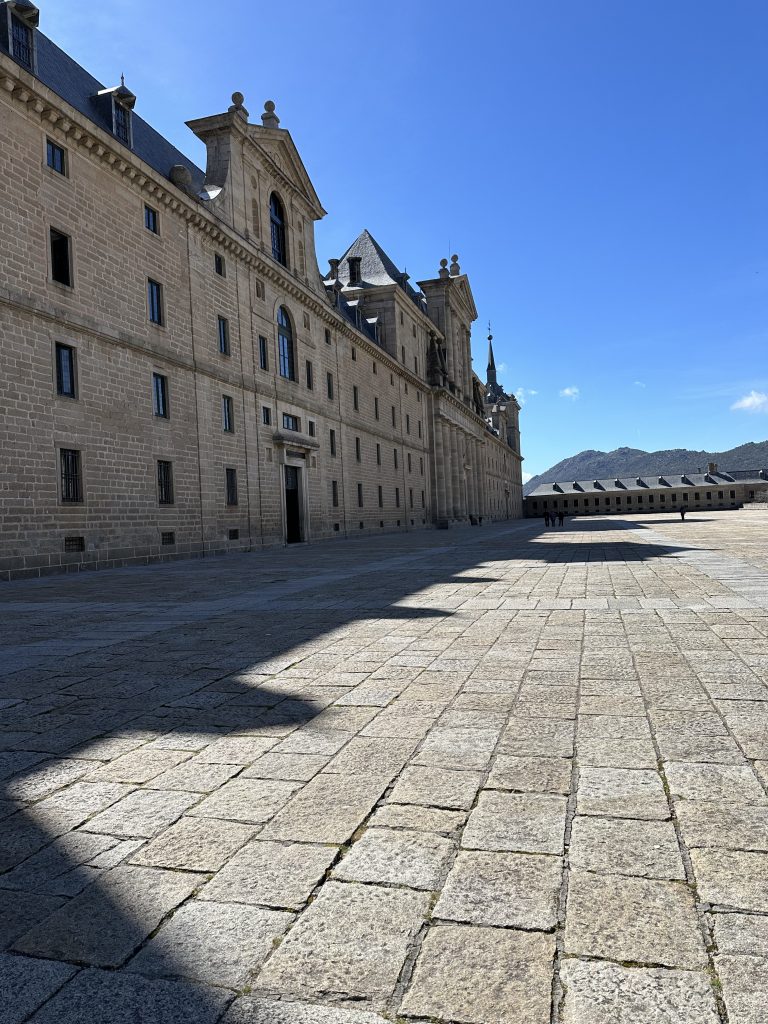
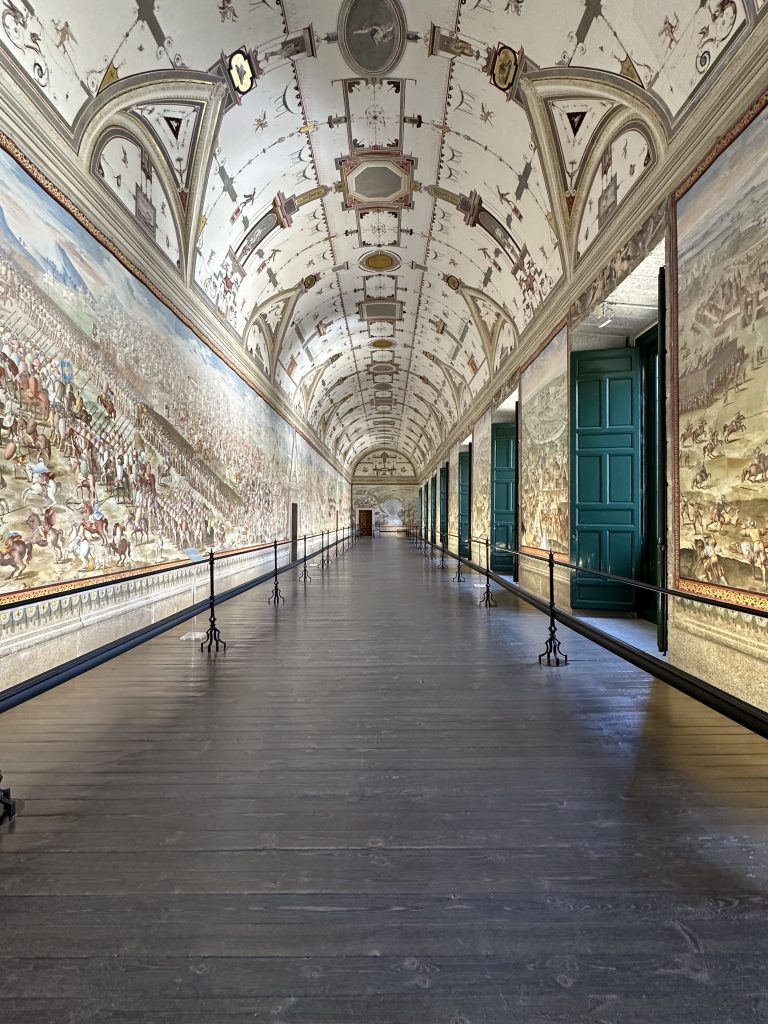
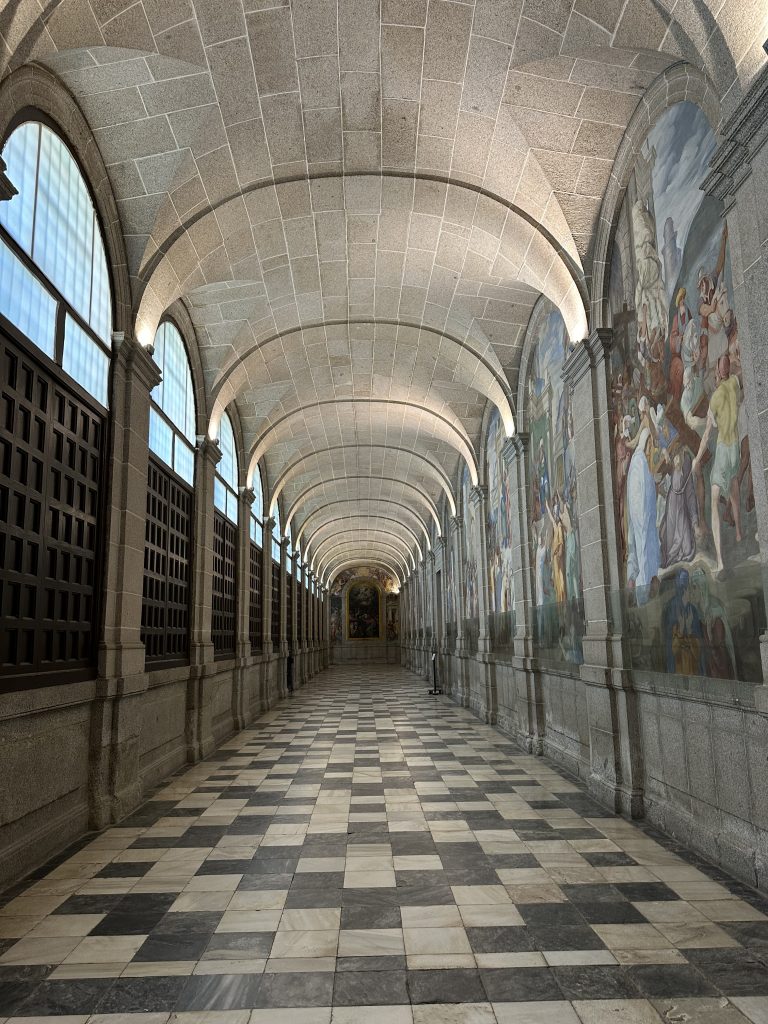
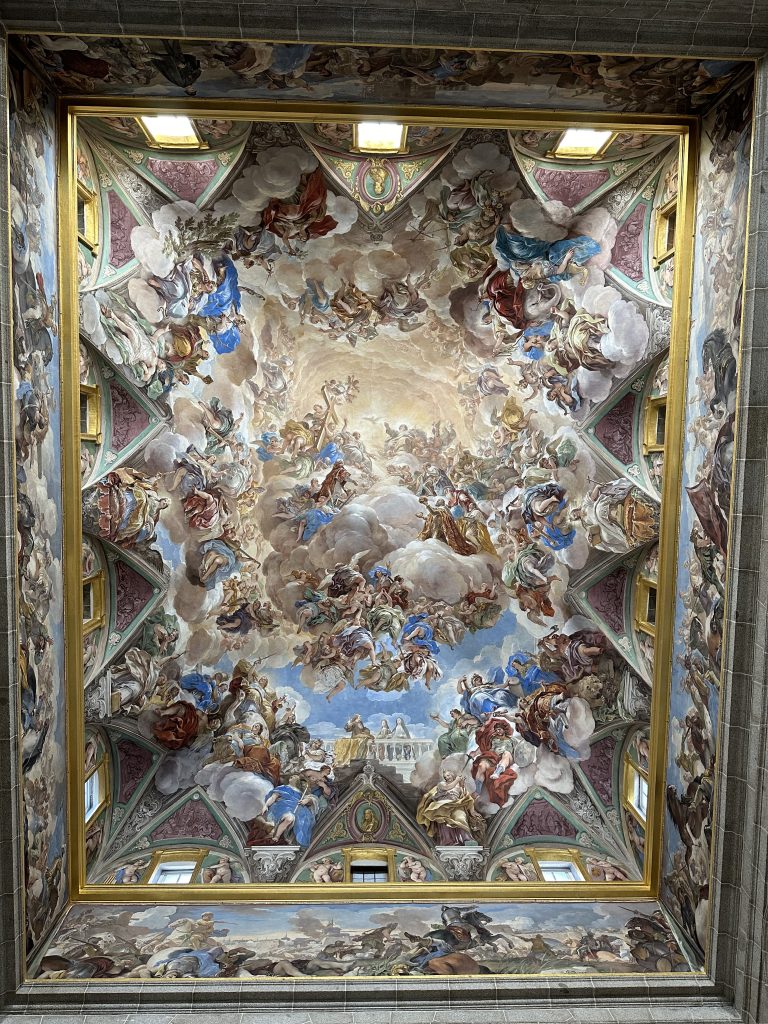
The greatest legacy of Philip II is undoubtedly El Escorial. This monumental building remains one of Spain’s most important historical and cultural landmarks to this day. It is the largest Renaissance building in the world and has been a UNESCO World Heritage Site since 1984.
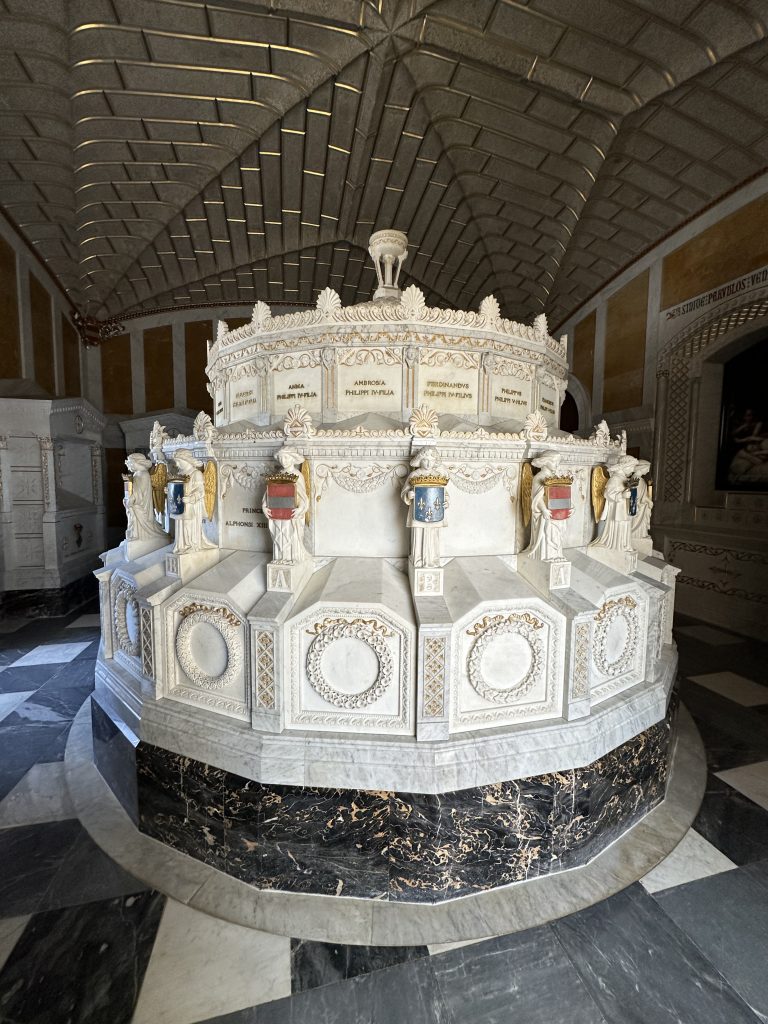
In 1563, Philip II commissioned the construction of the palace, monastery and mausoleum near Madrid. This building was not only intended to serve as a royal palace, but also as a symbol of the power and faith of Spain under his rule. It was also intended as a place where he could fulfil his religious and political duties. To this day, members of the royal family are laid to rest there.
The basic structure of El Escorial is unique and follows a square floor plan with a central courtyard. It has the shape of a lattice in honour of Saint Lawrence of Rome (Spanish: San Lorenzo), who, according to tradition, suffered martyrdom on a gridiron. El Escorial is dedicated to this saint, who lived as an early Christian deacon in Rome in the 3rd century.
‘Non sufficit orbis’ – His empire knows no borders
Philip II was not only King of Spain, but also of Naples, Sicily and Portugal (as Philip I), as well as Duke of Milan and King of England (as husband of Queen Mary I).
Philip II lived a relatively secluded life in El Escorial. He spent a lot of time praying, but also on affairs of state and the administration of his vast empire. Philip’s motto was “Non sufficit orbis” (English: The world is not enough). His empire extended from the Philippines, which were named after him, to territories in Italy, the present-day Netherlands, Belgium and Luxembourg as well as the American colonies (including Mexico, Peru, Ecuador and Bolivia). Spain also controlled territories in the Mediterranean and North Africa.
Patron of the arts and defender of the Catholic faith
During his reign, Spain experienced a golden age of art and literature, which is often referred to as the golden age of Spanish literature and art. Works by great Spanish artists and writers such as El Greco, Diego Velázquez, Miguel de Cervantes and Lope de Vega were created under his patronage.
Philip II was a staunch defender of Catholicism and led the Counter-Reformation in Spain. He fought Protestantism and supported the Catholic powers in Europe. His politics were strongly influenced by his faith and he saw himself as a defender of the Catholic faith against the Reformation.
Philip II was also known for his maritime expansion and his efforts to strengthen the Spanish colonial empire in America. He was responsible for organising the Spanish Armada, which sailed against England in 1588 to conquer it and end the Protestant rule of Queen Elizabeth I (the successor and sister of his second wife), which failed. The result was a crushing defeat at the hands of the English fleet, ending Spanish naval supremacy and marking the beginning of the decline of Spanish naval power.
The women at Philip’s side: a royal saga in four marriages
All four of Philip II’s marriages were politically motivated and served to promote Spain’s interests in Europe. While his relationship with Elisabeth de Valois, his third wife, has been described as happy, the other marriages were characterised by various challenges.
- Maria Manuela of Portugal: The marriage was aimed at strengthening relations between Spain and Portugal. The marriage only lasted a few years, as Maria Manuela died in 1545 after giving birth to two children for Philip II. Her death was perceived as a personal loss by Philip.
- Queen Mary I of England: This marriage was characterised by religious and political tensions. Philip II married Mary, also known as Bloody Mary, in order to improve relations between Spain and England and to strengthen Catholicism in England. The marriage remained childless, and Mary’s death in 1558 ended the union.
- Élisabeth de Valois: The comparatively happy marriage to the daughter of the French King Henry II produced several children, including the future King Philip III. Élizabeth was held in high esteem by Philip, and her death in 1568 was a severe blow to him.
- Anne of Austria: This marriage was intended to strengthen relations between Spain and the Holy Roman Empire. Although they had several children, the marriage was marked by rumours of Philip’s extramarital affairs and Anna’s feelings of neglect.
Two of his daughters with Élisabeth de Valois played an important role in Philip’s life and were particularly favoured and supported by him. While his relationship with his children was characterised by the demands of his reign and dynastic obligations, he nevertheless developed strong personal bonds with some of his children, particularly these two daughters.
- Infanta Isabel Clara Eugenia: She became actively involved in the politics and government of the Spanish Empire and played an important role in the administration of the Spanish Netherlands. Isabella had a close relationship with her father and was appointed by him as governor of the Spanish Netherlands.
- Infanta Catalina Micaela: Philip II also had a close relationship with Catalina and had high hopes for her future. However, she died prematurely at the age of just 21.
Between tyranny and triumph – the dark shadows of a controversial reign
Despite his achievements, Philip II was criticised in equal measure for his tyrannical rule and his controversial political decisions. His iron grip over the empire, combined with fanatical Catholicism, led to religious conflict and political oppression. His hunger for power often brought Spain to the brink of financial ruin and economic instability. These shadows cast a gloomy light on his legacy, which is still the subject of controversy today.